BMA putty polyester
Adjusts surface unevenness on metal surfaces.
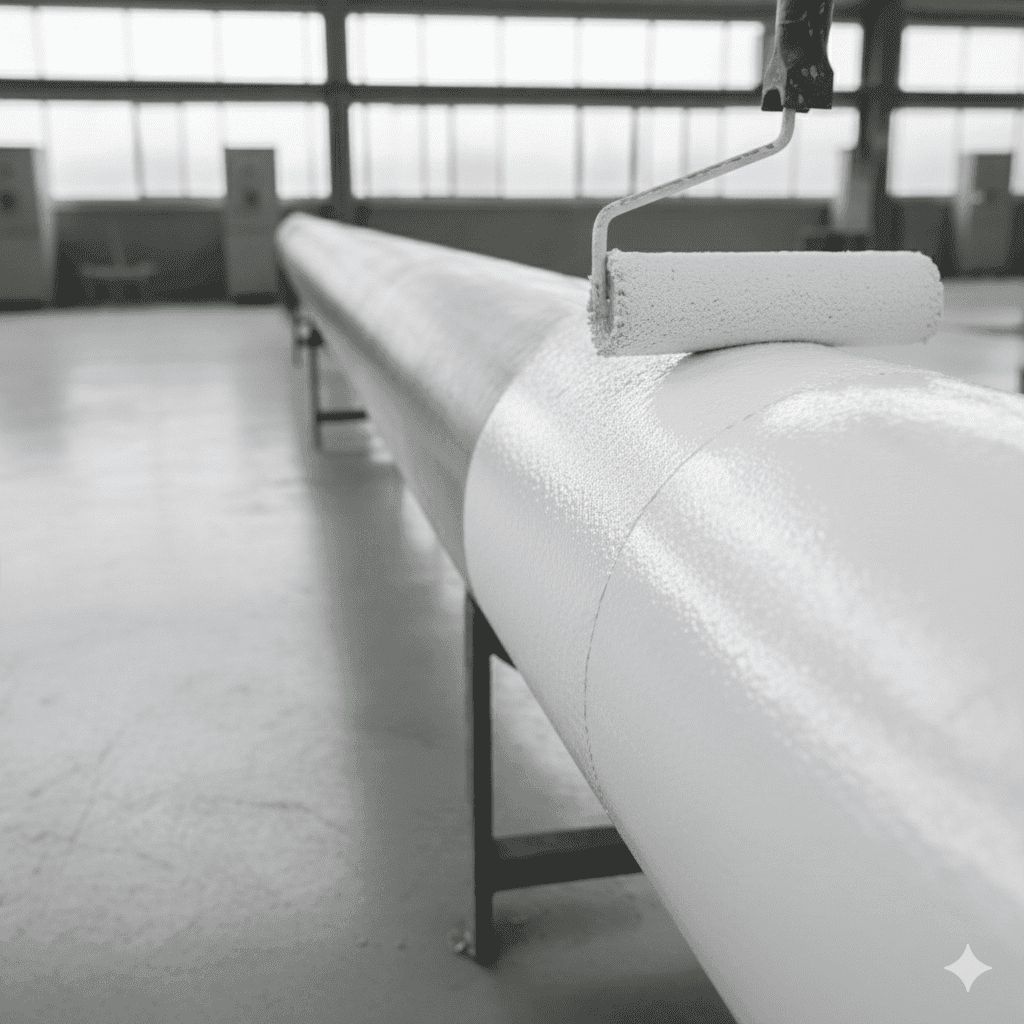
BMA Nitrocellulose (NC) Primer is a nitrocellulose solvent-based pigmented primer with fast drying, high durability, good hardness and adhesion properties. It is designed for application on any steel or wooden substrate.
Data for BMA NC Primer White
| Parameter | Norm / standard | Result |
|---|---|---|
| Total Solids, by weight (%) | ASTM D1259 | 60.2 |
| Total Solids, by volume (%) | ISO 3233 | 40 |
| Viscosity at 25 °C (Poises) | ASTM D562 | 65 |
| Specific Gravity (g/cm³) | ASTM D1475 | 1.348 |
| Total Volatile Organic Compound (VOC) (g/L) | ASTM D3960 | 536.07 |
| Appropriate solvent | — | Universal Fast Thinner |
| Solvent ratio by volume (%) | — | 35–50 |
| Parameter | Norm / standard | Result |
|---|---|---|
| Recommended WFT (µm) | — | 85–115 |
| Recommended DFT (µm) | — | 35–45 |
| Theoretical Spreading Rate (m²/L) | — | 8.88–11.42 |
Before applying BMA NC Primer, carry out all necessary pretreatment. The surface should be clean, dry and free of all contaminants (oils, dust, dirt, etc.) to avoid the risk of surface failure.
For new steel, sand the substrate to Sa 2½ if it is corroded, then remove all sanding dust. Clean the surface of any oil or grease residues using a solution of Samas 3 in 1 phosphating additive diluted in water (1:35), and let it dry before any primer application. For painted steel, remove loose and peeling paint by mechanical methods such as sanding and sandblasting the entire surface until smooth, so the new coating can adhere properly. When the old paint is compatible with the new one, only light sanding is required. Then remove persistent dirt and sanding residues. For non-ferrous metal (galvanized steel, aluminum, stainless steel, iron, etc.), remove any corrosion residues. Use Wash Primer to etch the substrate and promote adhesion of the subsequently applied coatings. If the surface is unetched or etching is not possible, apply a sweep or brush blast cleaning with a non-metallic abrasive to lightly roughen the surface. Let the surface dry before coating application. To adjust surface unevenness, apply BMA putty polyester. For corrosion prevention, prime the cleaned surface directly.
For previously painted wooden surfaces, remove paint residues with a scraper to avoid flaking of the new coating in case it is not compatible with the old one. Sand and smooth the surface, then clean it well and remove the sanding dust before any primer or sealer application. For new wood, sand the surface and all edges lightly until smooth. Apply BMA insulator for oily wooden substrates. If the applied coating is a solvent-based system, no thinning is required for the insulator; if it is a water-based system, thin the insulator by 100% for faster solvent evaporation and let it dry for at least 3 days. Then use BMA NC Putty to close off, patch and fill all surface imperfections (cracks, holes, pores, etc.). Clean the substrate, let it dry, and make sure the moisture content does not exceed 10%. Apply 2 to 3 layers of BMA NC Primer. Sand until smooth using 300-grit sandpaper. Clean well before any coating application.
If thinning is required, use 35–50% thinner when an air-spray system is used for primer application.
Apply BMA NC Primer in a well-ventilated area where the relative humidity does not exceed 70%. The required temperature for optimum performance is between 10 °C and 30 °C. Apply BMA NC Primer to a clean, dry surface with a spray system, after mixing it sufficiently with the thinner. Overcoating can be done once the primer is sufficiently dry.
The products this coating is specified alongside in the data sheet.
Adjusts surface unevenness on metal surfaces.
Closes off, patches and fills surface imperfections (cracks, holes, pores, etc.) on new wood.
BMA Nitrocellulose (NC) PuttyEtches non-ferrous metal substrates and promotes adhesion of subsequently applied coatings.
View in catalogListed as the appropriate solvent in the technical specifications; solvent ratio 35–50% by volume.
Solution diluted in water (1:35) to clean new steel of oil or grease residues.
Applied on oily wooden substrates. No thinning for a solvent-based system; 100% thinning for a water-based system, then let dry for at least 3 days.
Store in undamaged, unopened containers. The product must be kept away from direct sunlight and any sources of heat or flame.
Contains volatile organic compounds (VOCs); avoid release into the environment. Dispose of in accordance with local environmental regulations. Prevent contamination of soil and waterways.
Harmful by inhalation, skin contact, and if swallowed. May cause allergic skin reactions, respiratory irritation, or eye damage. Prolonged exposure may affect the central nervous system.
Use only in well-ventilated areas. Wear appropriate personal protective equipment (PPE) including gloves, goggles, and a respirator. Avoid direct contact with skin and eyes. Do not eat, drink, or smoke while using the product.
Inhalation: Move to fresh air; seek medical attention if symptoms persist. Skin Contact: Wash immediately with soap and water. Remove contaminated clothing. Eye Contact: Rinse cautiously with water for several minutes. Seek medical advice. Ingestion: Do not induce vomiting. Rinse mouth and seek immediate medical assistance.
The theoretical spreading rate is 8.88–11.42 m² per liter at the recommended dry film thickness of 35–45 µm.
Universal Fast Thinner, at 35–50% by volume.
Apply it in a well-ventilated area, with humidity no higher than 70%, and at a temperature between 10 °C and 30 °C.
Tell us your project and volumes — our export team replies with pricing and lead times.