
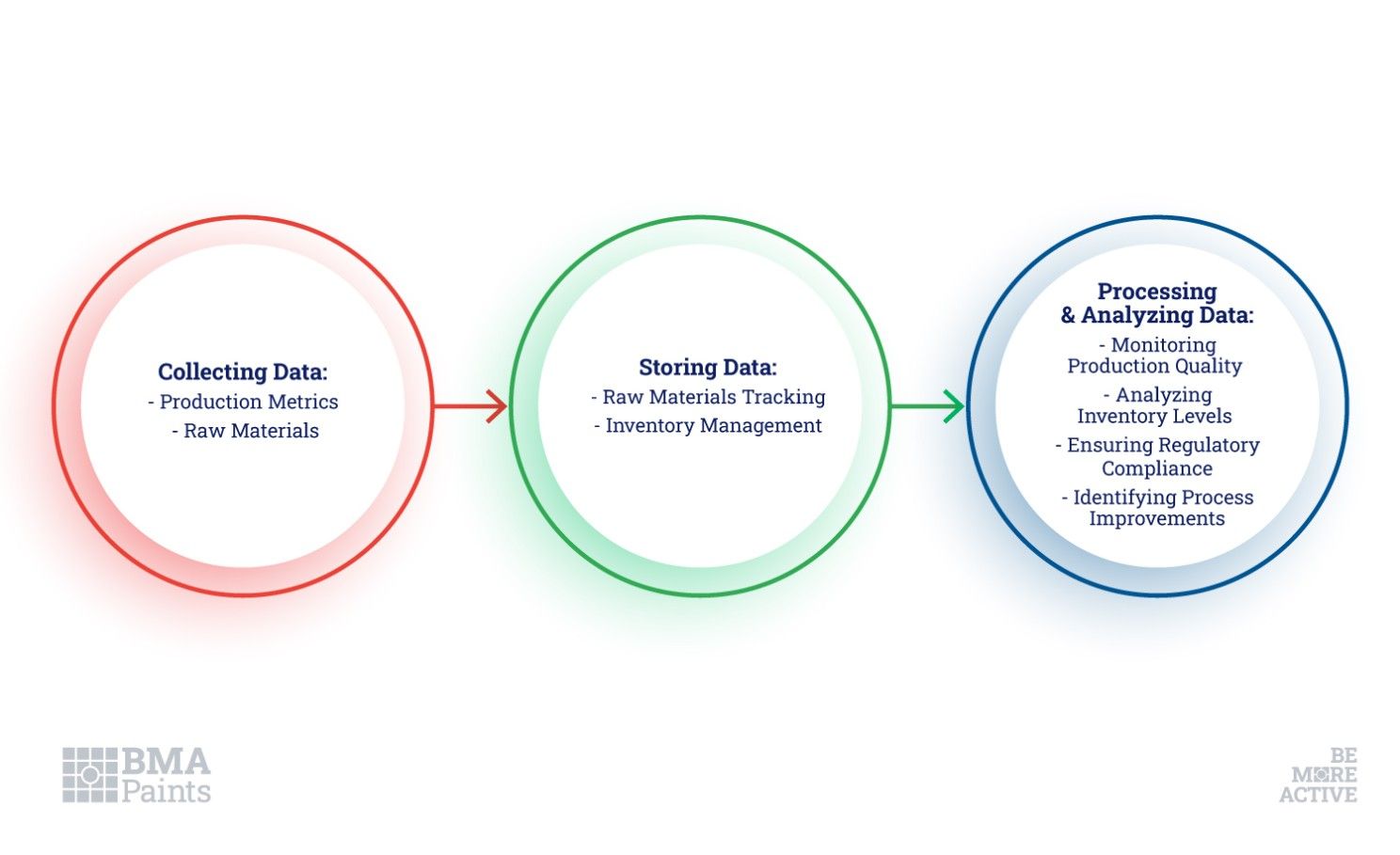
A data controller in a paint factory plays a crucial role in managing and overseeing data related to production, quality, and compliance. This includes collecting, storing, and processing information on production metrics, raw materials, and inventory. By maintaining a clear and structured approach to data management, the data controller helps improve efficiency, reduce waste, and ensure that the factory meets both safety standards and customer expectations.
This article will provide a closer look at the specific duties and significance of the data controller’s work within the paint factory setting, highlighting the intersection of data, technology, and manufacturing operations. Through this role, a paint factory can continue to innovate, streamline its processes, and provide consistent, high-quality products to its customers.
I. Data Management and Code Creation
1- Code Development & Maintenance: Creating, updating, organizing and managing unique codes and barcodes for raw materials, finished goods, and production batches. This helps streamline the identification process, minimizes errors, and ensures traceability within the process. Each code includes the product description, barcode and batch number, which are linked to inventories and production formulas.2- Data Accuracy & Consistency: Ensuring that all data entered into the system (including codes, quantities, production numbers, etc.) is accurate and consistent across different platforms and departments, as well as standardized formats for data entry.
II. Inventory Management and Monitoring
1- Inventory Oversight: The data controller regularly monitors the inventory of raw materials, intermediate goods, and finished products. This includes conducting stock audits, maintaining records of incoming and outgoing materials, and ensuring that the stock levels are accurate and in line with production needs.
2- Inventory Optimization: By analyzing inventory data, the data controller helps the company optimize its stock levels, avoiding overstocking or stockouts. This might involve coordinating with procurement teams to ensure a continuous flow of raw materials and efficient production scheduling.
3- ERP System Integration: Responsible for ensuring the system is updated with real-time data, ensuring that inventories are synchronized across all departments.
III. Cost Control and Budgeting
1- Cost Tracking and Reporting: Tracking costs related to raw materials, labor, and expenses by generating reports that highlight cost fluctuations, variances, and trends to help management make informed decisions.2- Cost Analysis: Analyze production data to identify areas where cost savings can be made, whether through process improvements, better inventory management, or supplier negotiations. This could also involve analyzing the cost-effectiveness of different raw materials or production methods.
3- Support in Budgeting: Assisting in the preparation of budgets by providing accurate data on historical spending patterns, material costs, and production efficiency.
IV. Data Reporting and Analysis
1- Generating Reports: Generating and presenting various reports to department heads or senior management, offering insights into the production cycle, inventory status, cost analysis, and other key metrics.2- Data Analysis for Decision-Making: Using data analysis tools, the data controller evaluates trends, monitor production efficiency by checking the transactions, and identify potential problems (such as bottlenecks or material shortages) that could impact operations.
V. Collaboration with Other Departments
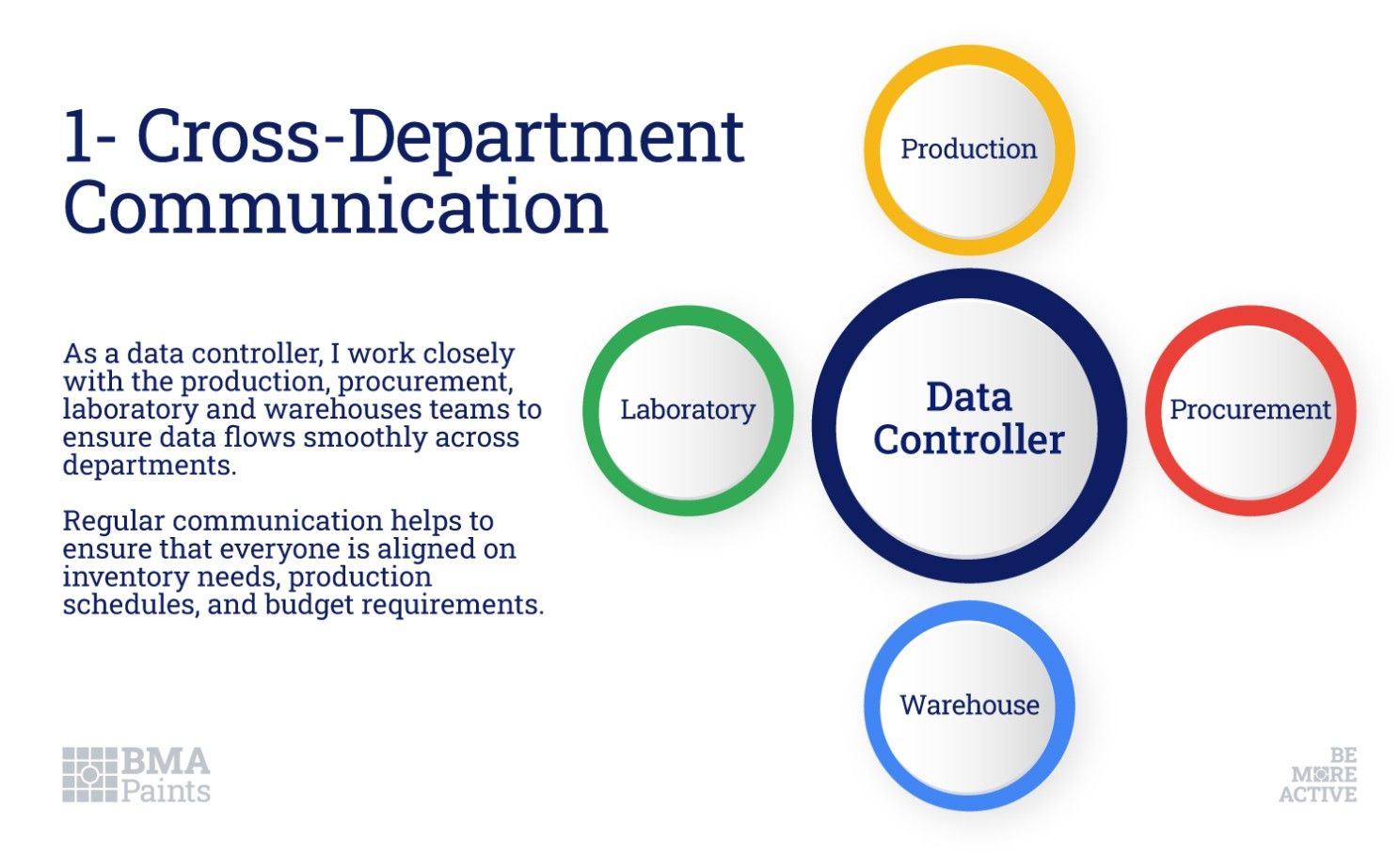
2-Problem-Solving: Whenever discrepancies or issues arise, such as inventory mismatches or cost overruns, we collaborate with other departments to resolve the problem and prevent future issues.

VI. System Maintenance & Improvements
1- Continuous System Optimization: the data controller has the responsibility of recommending updates or system improvements that make data entry, reporting, or analysis more efficient.2-Training & Support: As we grow, the data controller also plays a role in providing the necessary training for new employees on the proper use of the system, ensuring a good understanding of the data, performing transactions, data entry, and other system operations, conducting inventory checks, and generating reports.
As technology and data analytics continue to evolve, the data controller’s role always remains crucial in driving the factory’s growth, enhancing adaptability, and ensuring overall success in a highly competitive market.